
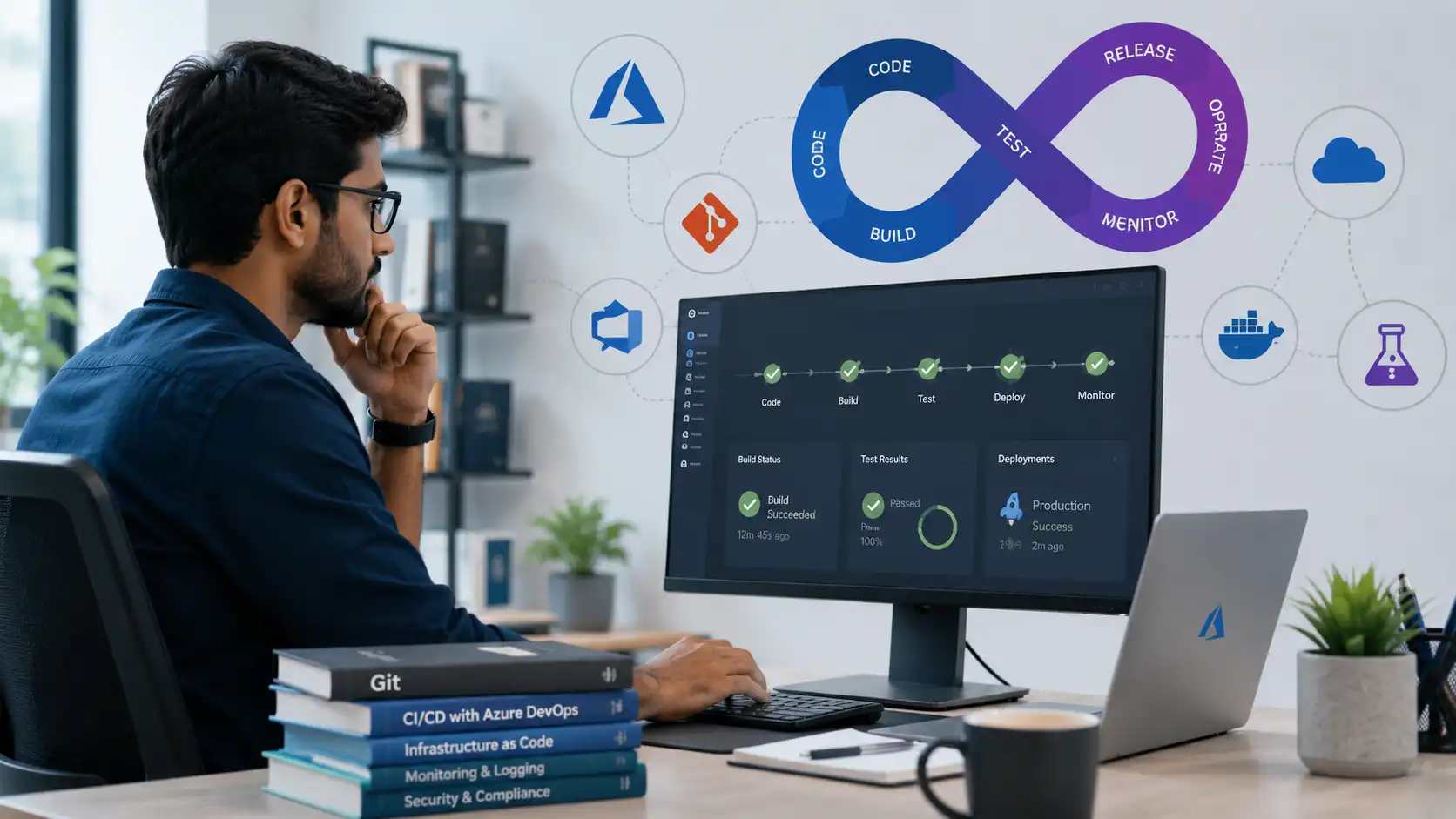
Ask experienced DevOps engineers what trips up developers moving into their field, and you’ll get a surprisingly consistent answer: it’s rarely a technical skills gap in the traditional sense. Most developers can learn new tools quickly. What actually separates a struggling transition from a smooth one is a shift in mindset, from “does my code work” to “does this system stay healthy, secure, and recoverable in production, at 3 a.m., without me having to be there.”
The Mindset Shift Nobody Talks About Enough
As a developer, your responsibility often ends once your code is merged and passes review. As a DevOps engineer, your responsibility extends to how that code behaves in production, how quickly a failure gets detected, and how easily the system recovers when something inevitably breaks. This is less about learning new tools and more about developing what experienced engineers call operational thinking, constantly asking “what happens when this fails” rather than only “does this work as intended.”
Skill 1: Infrastructure as Code
Your development background gives you a real head start here, since Infrastructure as Code tools like Terraform or Bicep are, at their core, just another kind of code that benefits from the same version control and testing discipline you already practice. The shift is learning to think of infrastructure itself as a product with its own lifecycle, rather than something operations handles separately after you’ve finished writing application code.
Skill 2: Owning the Full CI/CD Pipeline
Developers typically interact with a pipeline someone else built. DevOps engineers design, maintain, and troubleshoot that pipeline itself. This means understanding Azure Pipelines or GitHub Actions deeply enough to build multi-stage pipelines with proper testing gates, environment promotion, and rollback strategies, not just triggering an existing pipeline and waiting for a green checkmark.
Skill 3: Monitoring, Observability, and Incident Response
Developers debug code locally or in a staging environment with plenty of time to think. DevOps engineers need to diagnose problems in live production systems, often under time pressure, using dashboards, logs, and alerts rather than a debugger attached to their own machine. Building fluency with Azure Monitor, Application Insights, and structured logging practices, along with participating in blameless postmortems after incidents, is central to this skill and represents one of the biggest genuine gaps developers need to close.
Skill 4: Security as a Built-In Responsibility, Not a Separate Team’s Job
As a developer, security often felt like someone else’s review step before deployment. As a DevOps engineer, you’re expected to build security directly into the pipeline itself, through practices like scanning dependencies for vulnerabilities automatically, managing secrets properly rather than hardcoding them, and understanding least-privilege access for the infrastructure your pipelines touch.
Skill 5: Cross-Team Communication and Ownership
DevOps engineers sit at the intersection of development, operations, and often security teams, which means communication skills matter more in this role than most developers expect coming in. Explaining a production incident clearly to non-technical stakeholders, negotiating realistic deployment windows, and documenting systems for teammates who didn’t build them are all part of the job, not optional extras.

Is AZ-400 the Right Certification for This Transition?
Yes, generally. AZ-400, Microsoft’s Designing and Implementing Microsoft DevOps Solutions exam, directly tests the skills covered here: CI/CD pipeline design, infrastructure as code, security integration, and dependency management. Microsoft recommends having AZ-104 or equivalent Azure experience first, so developers without existing Azure infrastructure exposure may want to build that foundation before attempting AZ-400 directly.
What This Transition Typically Looks Like in Pakistani IT Teams
In many Pakistani IT services companies, this transition often happens organically, with a developer gradually picking up more pipeline and infrastructure responsibility on a project before formally moving into a DevOps-titled role. International clients increasingly expect dedicated DevOps ownership on their projects, which creates real demand for developers willing to make this shift, often with a meaningful pay increase attached once the transition is complete and demonstrated.
Common Mistakes to Avoid
Assuming this transition means abandoning coding entirely is a common misconception; strong DevOps engineers still write code regularly, just applied to infrastructure, automation, and tooling rather than only application features. Underestimating the operational mindset shift, and expecting the transition to be purely about learning new tools, is another common mistake that experienced engineers consistently flag as a gap in newcomers. Trying to make this transition without any Azure infrastructure experience, skipping straight to AZ-400-level thinking, also tends to create frustration that a solid AZ-104 foundation would have prevented.
Future Trends to Watch
As platform engineering grows, some organizations are splitting the traditional DevOps engineer role into more specialised platform and reliability engineering tracks, which means the specific skill emphasis within “DevOps engineer” job titles may continue to shift over the next few years. AI-assisted incident response and automated remediation tools are also starting to handle more routine operational tasks, making the judgment and communication skills covered here more valuable relative to pure tool proficiency, not less.
Final Recommendation
If you’re a developer seriously considering this move, start building infrastructure as code experience and basic monitoring fluency now, on your current projects, rather than waiting until you’ve officially changed roles. When you’re ready to formalize the transition, itechnets’ Azure DevOps Engineer training is built specifically around this developer-to-DevOps path, combining AZ-400 exam preparation with the real-world operational skills this article covers.
FAQs
Do I need to stop coding if I move from developer to DevOps engineer?
No. DevOps engineers still write code regularly, applied to infrastructure as code, automation scripts, and pipeline configuration rather than only application features.
What’s the biggest gap developers underestimate in this transition?
Operational thinking, meaning the shift from “does my code work” to “does this system stay healthy and recoverable in production,” rather than any single specific tool or technology.
Should I get AZ-104 before attempting AZ-400 as a developer?
Yes, generally. AZ-400 assumes existing Azure infrastructure knowledge, so developers without that foundation typically struggle unless they build it first through AZ-104 or equivalent hands-on experience.
Does this transition come with a pay increase?
Often, yes, particularly in Pakistani IT services companies serving international clients who increasingly expect dedicated DevOps ownership on their projects.
How long does the developer-to-DevOps-engineer transition typically take?
With focused effort, three to six months is realistic for building the core skills covered here, though the timeline varies based on your existing Azure infrastructure exposure.